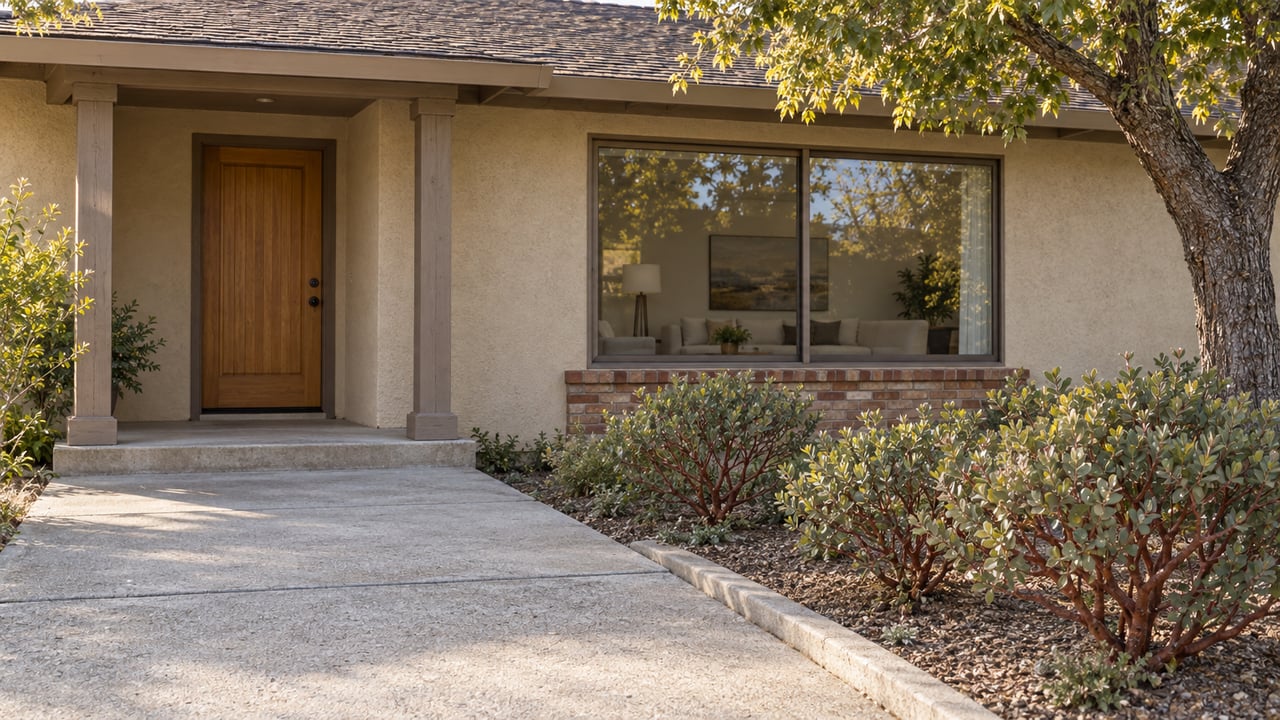
Jamestown's Sewer Moratorium Is Over. A Lot's Paperwork Now Decides What a Hookup Costs.
October 15, 2026
October 15, 2026
On July 30, 2026, the Jamestown Sanitary District board adopted Resolution 26-218 and ended a moratorium on new sewer connections that had been in place since December 2023. For anyone who owns or is looking at a vacant lot inside the district, the headline sounds like the door swung back open. It did. The price of walking through it changed, though, and so did the way every existing home in the district pays for sewer service.
The connection fee for a single-family residence went from $6,858 to $22,845. Two in-district lots that look the same on a map can now carry very different hookup costs, depending on what approvals the parcel picked up before the moratorium. Homes already connected now carry an annual sewer charge on the county tax bill, and the district has scheduled it to rise every July through 2029.
The district's capacity fee study, dated January 29, 2026, says JSD imposed the formal moratorium in December 2023 because growth had used up nearly all of its wastewater treatment capacity. The study estimated that only about 137 more equivalent single-family residences could be served.
A new treatment plant isn't what reopened the door. The fix was in the pipes. During 2025 and 2026, JSD used a $2.66 million state REAP 2.0 grant, which Tuolumne County Community Development secured and administered, to assess and repair the collection system. The district says the work cut the stormwater and groundwater seeping into the lines and "significantly" lowered the flow reaching the treatment plant. Less rainwater and groundwater in the pipes left room for actual sewage from new connections.
That distinction matters for anyone planning to build. The room freed up came from repairing pipes, and the plant itself still needs work. District officials told myMotherLode in August 2026 that upgrading the plant still requires millions in debt-financed improvements. Nearly two-thirds of that cost is tied to bringing effluent filtration up to the tertiary standards the Tuolumne Utilities District requires for discharge into Quartz Reservoir.
The new fee was adopted under Resolution 26-211 after a public hearing on March 12, 2026, according to the district's capacity fee page. The capacity fee study breaks the $22,845 charge into three parts. One equivalent single-family residence is defined as 160 gallons a day.
| Component | Amount per ESFR |
|---|---|
| JSD facility expansion | $21,245 |
| JSD administration | $320 |
| TUD discharge | $1,280 |
| Total new connection fee | $22,845 |
| Prior total fee | $6,858 |
On a basic single-family lot, the buyer now pays $15,987 more to connect than under the old schedule. The study says the money goes to capital improvements for expansion, not routine operations, and it assigns the cost of planned new capacity to new development instead of existing customers. The district's own summary says the new fees are meant to keep current ratepayers from being affected by new development. In an August 2026 series, myMotherLode reported that the new charge ranks among the most expensive connection fees in California.
The $22,845 figure doesn't apply to everything:
Here is where two lots on the same street can differ by thousands of dollars. District officials told myMotherLode that a parcel holding a verified allotment or a conditional "intent-to-serve" approval before the moratorium was already legally cleared to connect under the old connection fee.
For a seller, that means an old letter from the district may be one of the most valuable documents in the file. For a buyer, it means the asking price on an in-district lot tells only part of the story. A lot with a documented pre-moratorium approval and a lot without one could list at similar prices and still differ by about $16,000 in what it takes to get a house connected.
Anyone without that paperwork goes into the general queue. JSD says it will evaluate new applications on a first-come, first-served basis. Lifting the moratorium didn't hold any capacity aside for a particular parcel.
The August 2026 series gave the clearest look at what comes next. Officials said development timelines for sites served only by JSD will have to line up with the district's tertiary upgrade, because the district's ability to issue new hookups depends directly on how much new flow the plant can safely handle. They acknowledged that limits could affect a developer's ability to get construction loan funding or new connection permits, or to clear a newly built home for final occupancy.
Officials also said there's no backlog of developers waiting, and that the one recent inquiry they mentioned wasn't put off by the higher fee. For a lot buyer financing a build, the useful question to put to the district is about timing: whether a connection can be confirmed early enough for the lender and the building permit.
Not every new project in the area depends on JSD. The 230-home Valley Vista subdivision on Golf Links Road reached an agreement to send its sewage through the Tuolumne Utilities District instead. Its timeline says little about what an infill lot in town faces.
The same restructuring changed things for owners who will never need a new hookup. JSD used to mail monthly bills. It now collects the sewer charge on the Tuolumne County property tax roll, starting with the 2026-27 fiscal year. Annual statements went out in July 2026, and a line labeled "JSD Sewer Charge" appears on the county tax bill. The district held a hearing on the change on June 11, 2026, and describes it as a change in how the charge is collected, not a separate rate increase.
The rate itself did go up, through a separate Proposition 218 process. The board held that hearing on November 7, 2025, found no majority protest, and adopted Resolution 25-207. Since July 1, 2026, the rate has been $132.53 a month per equivalent single-family residence, or $1,590.36 a year. The district's five-year plan steps it up from there:
From the current charge to the July 2029 figure is an increase of $722.76 a year. For a buyer comparing monthly housing costs on two Jamestown homes, a home inside the district now carries a known, scheduled cost that a home on its own septic system doesn't.
The move to the tax roll changes how the charge is handled at closing. The district told myMotherLode that owners with a mortgage should expect their lender to add the sewer charge to their monthly escrow payment. Owners without a mortgage pay it as part of the tax bill and can't separate it out or skip it. Balances still owed on the old monthly accounts after June 30 are considered delinquent and become property liens unless paid. Because the lien attaches to the property, an unpaid old balance is something a seller and the escrow officer will want to confirm is settled before closing.
How do I know whether a parcel is in the Jamestown Sanitary District? JSD posts a service-area boundary map, but it's labeled 2019, and the district ties its charges to assessor parcel numbers. The most reliable check is to give the APN to JSD at [email protected] or 209-984-5177.
Did the district consider merging with TUD? Yes. District leadership said a full merger was explored and judged not workable, because TUD's existing customers would have taken on JSD's multimillion-dollar debt. The two districts are working together under a regional operating agreement instead.
Is the district planning any other revenue sources? Officials described plans to install a recycled water truck fill station at the Quartz facility as part of the tertiary upgrade. The station would sell disinfected recycled water for commercial and agricultural use, bringing in revenue that doesn't come from ratepayers.
If you own a lot inside the district, or you're weighing one against a parcel on septic, I'm happy to help you find out what approvals are on file with JSD and what a hookup would cost before you set a price or make an offer. You can reach me through Elaine Hogan. Let's Connect.
This article is general information, not legal, tax or financial advice. Consult a qualified professional about your situation.
Stay up to date on the latest real estate trends.
Buying or selling in La Grange deserves an agent who understands the area beyond the listing sheet. Elaine Hogan brings local insight, PMZ Real Estate support, and years of experience helping clients move with confidence in a market shaped by seasonality, rural properties, and changing buyer demand. If you’re looking for a home, land, or a future retreat in the foothills, Elaine offers a practical and personal approach from first conversation to closing.
(209) 770-6769
[email protected]
14375 LAS MORAS ST
LA GRANGE, CA 95329